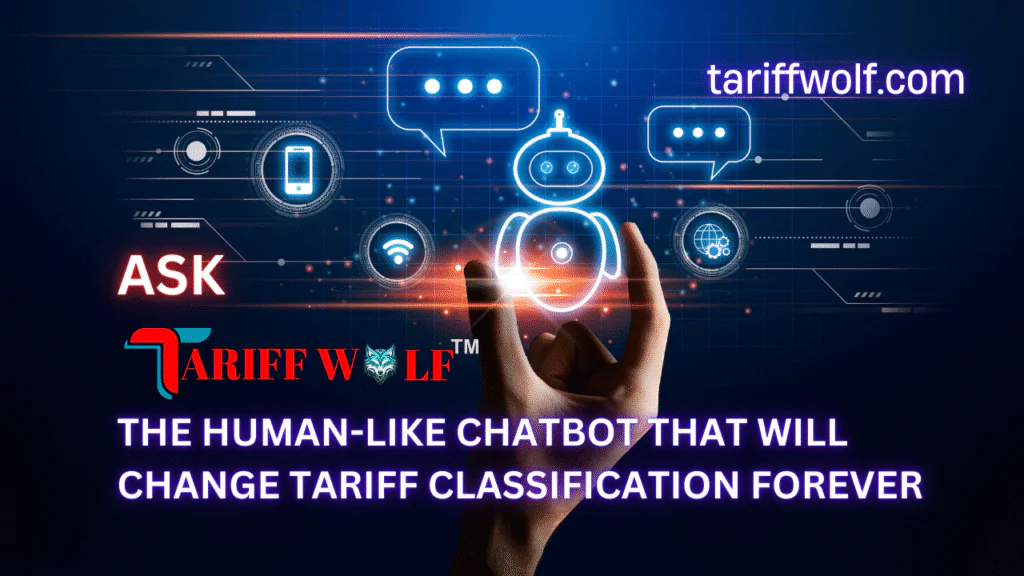
Ask Tariff Wolf™ is a conversational chatbot for HS classification, announced in August 2025. You describe a product in plain language, in your own language if you prefer; it can ask clarifying questions, and it suggests a code with a confidence level and a justification that refers to the General Rules for the Interpretation of the Harmonized System (GRIs) and the WCO Explanatory Notes. It is designed to support HS classifiers, who still make the final decision.
Tariff classification is the process of assigning the correct HS (Harmonized System) code to every product that crosses a border. One small mistake can lead to costly delays, compliance risk and unhappy customers.
Why classification is still slow
Classification has long been slow, manual and error-prone. Even experienced HS classifiers can spend hours going through tariff schedules, legal notes, explanatory notes and customs databases to reach one decision. Global supply chains, new materials and hybrid products make the work harder.
The stakes are high. A wrong HS code can mean fines, shipment holds, loss of trust and legal penalties. Existing software has not solved this: most platforms are either expensive enterprise systems or keyword-based search engines that rarely explain why they chose a code, and they need training to use.
What Ask Tariff Wolf does
Ask Tariff Wolf works like a conversation with a classifier. It reads your product description, asks clarifying questions where something is missing, and then walks you through the reasoning behind the code it suggests. Its main features at launch were:
- a chat interface that needs no training: you ask your question in plain language;
- reasoning about product details, going beyond keyword matching;
- a confidence level with each classification, to help you decide whether to accept it;
- a legal justification that refers to the GRIs and the WCO Explanatory Notes;
- native-language support, so you can ask in your own language and get the answer in it.
The justification matters most to a classifier. A code with its reasoning attached can be checked against the legal notes and the Explanatory Notes, and kept on file if customs asks questions later.
What it is meant to change
The aim is to shorten work that can take hours, and to lower the cost of classifying each product compared with traditional software or manual consulting. Because the chatbot answers in plain language, people without classification training, including small businesses in markets with few local experts, can get a reasoned starting point. The explanations also give the user something concrete to check before relying on a code in an audit, a dispute or a customs query.
Ask Tariff Wolf combines a classifier’s way of reasoning with a machine’s speed, and it is built to work with HS classifiers, not to replace them. The conversational format is the main difference from the original Tariff Wolf classification tool, which takes structured inputs such as titles, images and URLs. For how the underlying work started, see my tests of AI on HTS classification.
This post describes Ask Tariff Wolf™ as announced in August 2025. For TariffWolf’s current products, visit tariffwolf.com.